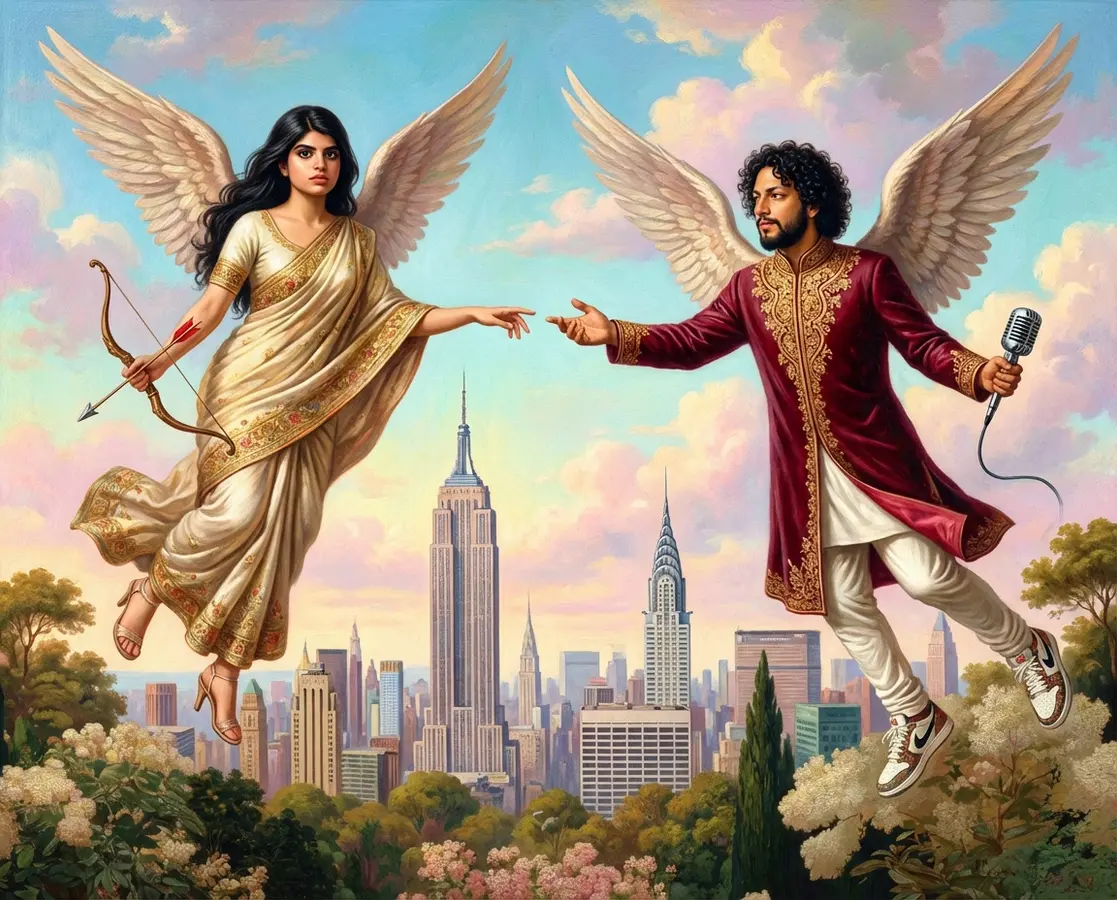
Homecoming King. If you know, you know. Hasan Minhaj's Netflix special from 2017 is one of the most important pieces of South Asian cultural content produced in the last twenty years, and it is not particularly close. He talked about his parents' marriage. He talked about the first-generation experience of growing up desi in America. He talked about being rejected, humiliatingly, by a white girl's family before prom. And the entire South Asian diaspora exhaled in recognition. This was the conversation that had not been happening. It was happening now, on a stage, in front of millions of people.
Comedy did something that Bollywood could not and Indian Matchmaking would not: it named things without moralizing about them. It put the desi experience, including the dating experience, on stage and said: this is real, this is specific, this is funny because it is true, and you are allowed to laugh at it. That permission changed things.
Comedy as the first culturally honest space
Before South Asian comedians cracked open the desi dating conversation, most desi cultural content was either Bollywood (which romanticized everything) or family dinner conversation (which avoided the topic entirely). There was no space where a South Asian person could talk honestly about what it was like to date while also being the child of immigrants, to navigate two completely different relationship cultures simultaneously, to want both the love story and the family approval and to have neither feel secure.
Standup comedy created that space. The comedian can say things from the stage that nobody would say at the family dinner table. The audience laughs and in the laughter there is recognition, and in the recognition there is relief. I am not alone in this. Other people experience this. It is not a personal failure. It is a shared condition. That is what good comedy does. It externalizes the internal. It makes the private public in a way that reduces shame.
The format matters as much as the content. Comedy requires the comedian to commit to a perspective. You cannot be ambivalent about a premise and still get the laugh. So when South Asian comedians put their dating lives on stage, they were required to be specific and direct about their experience in a way that a casual conversation about the topic never required. That specificity is where the cultural work happened.
The comedians who moved the culture
Hasan Minhaj named the first-generation desi dating experience in terms that were undeniable. The parental pressure, the dual cultural standard, the exhaustion of performing for two different audiences simultaneously. His Homecoming King material about the prom rejection, about his parents' arranged marriage, about what it means to be the child of people who did not have the luxury of choosing in the way you now choose, all of that landed because it was true and it had not been said that directly before.
The YouTube era produced a wave of South Asian content creators who brought the conversation into shorter form. The material was sometimes broad. But it was specific in the ways that mattered: it named the aunty pressure, the biodata question, the parental GPS tracking, the "why aren't you married yet" interrogation at every wedding. The community recognized itself and started to laugh at itself. That laughter has political power.
The most recent wave, post-pandemic, has been the most sophisticated. Desi comedians and content creators are now talking about not just the family pressure but the internalized pressure. Not just what parents say but what desi singles believe about themselves because of what parents have said for twenty years. The self-worth tied to relationship status. The shame about still being single. This material is harder and more interior. It is also where the real work is being done.
How comedy makes the unnameable nameable
The specific power of comedy as a format is that it can say things that straight conversation cannot. If you tell your parents directly that their pressure about marriage is causing you anxiety and affecting your mental health, they will argue with you. If Hasan Minhaj says it on a Netflix stage in front of millions of people and your parents watch it and laugh, something shifts. The external validation of the comedic frame changes what the content is allowed to be.
This is why the Garam Masala Dating format works. It is a comedy show first. The dating element lives inside the comedy context. When two South Asian singles are on stage navigating a first date and the room is laughing, the social stakes of the moment are transformed. The awkwardness becomes the material. The uncertainty becomes funny rather than terrifying. The audience is not judging. They are rooting. Comedy does that. It changes the relationship between the people in the room.
What live comedy dating does differently
The Garam Masala Dating format is the intersection of standup comedy and live dating. The comedy does not just frame the dating. It changes what dating is allowed to be. On a regular first date, both people are performing competence and attractiveness. On stage in a comedy show, the performance permission is different. You are allowed to be awkward. You are allowed to say the wrong thing. You are allowed to be genuinely surprised by what the other person says. That permission produces a very different quality of connection than the app date format.
What the community is still waiting for comedy to address
Queer desi dating. It is happening. Queer South Asian people are navigating the intersection of their romantic identities and their family and community expectations in ways that are specific and complex and almost completely absent from the mainstream desi comedy landscape. The material is there. The audience is there. The format exists. The comedians are out there. This is the next frontier of the conversation.
Desi dating after divorce is also underrepresented. The specific experience of a South Asian person re-entering the dating market after a marriage that ended, with all the community judgment and family complexity that involves, is almost completely absent from the comedy landscape. It should not be. The experience is real and it has material in it that deserves the stage.
The show is part of the continuing conversation. Come be in the room for the live version. Tickets here.