Indian Matchmaking premiered in 2020 and the South Asian internet has not been the same since. Every desi household suddenly had opinions about biodata formatting and the appropriate weight range to list. Aunties who had been quietly running their own matchmaking operations for decades were now doing it with the cultural legitimacy of a Netflix documentary. The show cracked something open. What exactly it cracked open, and whether that is a good thing, is worth examining properly.
I have watched every season. I have talked to hundreds of desi singles who have watched every season. I run a live dating show for South Asian singles. Here is my honest assessment.
What the show got genuinely right
The family pressure is real. Not performed. Not exaggerated. The show captures the specific texture of being a South Asian single in your late twenties or thirties with parents who have been waiting for this to happen for fifteen years. The conversations in kitchens, the aunties with leads, the whisper network of eligible candidates, that is an accurate portrait of how the arranged marriage adjacent process actually operates.
The checklist is also real. Sima's clients arrive with lists. Height. Profession. Skin tone, sometimes, though nobody says it out loud that cleanly. Education. Family background. Religion. Caste. These are not invented requirements. They are the actual requirements that many South Asian families have carried for decades, and the show is honest about them in a way that mainstream media almost never is.
The emotional exhaustion is also real. Every season has a contestant who has been going through this process for years. Who has met dozens of people. Who has adjusted their expectations based on what the market seems to want. Who is tired in a specific, bone-deep way that only comes from treating the search for a life partner like an extended job search. That exhaustion is something every desi single who has been on the apps or in the process for more than two years recognizes immediately.
What the show simplifies or gets wrong
The edit makes the process look more orderly than it is. In real life, the arranged marriage adjacent process is messier, more ambiguous and more emotionally complicated than what appears on screen. Meetings happen and then there is a long period of nothing where everybody is deciding. Families have contradictory opinions. Someone is interested and then is not. There is no episode structure imposing a shape on it.
Sima's methodology is also more opaque in real life than the show makes it look. The show presents her as someone with a network and an instinct for matching. What it cannot capture is the years of relationship capital she has built with specific families, the informal information that flows through her network about candidates, or the moments where the process becomes as much about family-to-family negotiation as person-to-person attraction.
The show cannot capture the years of quiet anxiety behind each meeting. When you watch a contestant walk into a date on screen, what you are seeing is a thirty-minute edit of what might represent the third meeting in a six-month process, preceded by a year of family conversations, social media research and four or five other prospects who did not work out. The stakes are higher than the episode runtime can show.
The Sima Aunty phenomenon
Sima Taparia became a genuine cultural figure. She was memed. She was quoted. She got her own documentary follow-up. And the reaction to her split almost perfectly along generational lines. Older South Asian viewers saw a professional doing necessary work. Younger South Asian viewers oscillated between cringing at her caste and skin tone commentary and finding her weirdly compelling.
What Sima represents is the professionalization of something that has always existed informally: the community matchmaker. The aunty who knows everyone. The network of family information that flows through social events and WhatsApp groups and wedding guest lists. Sima just made that visible and charged for it. The discomfort some viewers felt was not really about Sima. It was about the system she was operating in.
What the show did for desi dating conversations
This is where I give the show real credit. Before Indian Matchmaking, most desi families did not discuss the arranged marriage process openly. It was happening but it was not talked about as a process. The show gave the whole system vocabulary, which made it discussable. Suddenly desi kids could say "this is what my parents are doing" and point to a Netflix episode and have their non-desi friends understand.
It also normalized talking about the pressure in ways that had not been normalized before. The contestants on the show said out loud things that most desi singles only said in private. The loneliness. The feeling of being evaluated. The exhaustion of trying to perform compatibility with a stranger while your family watches from offscreen.
The live unscripted version
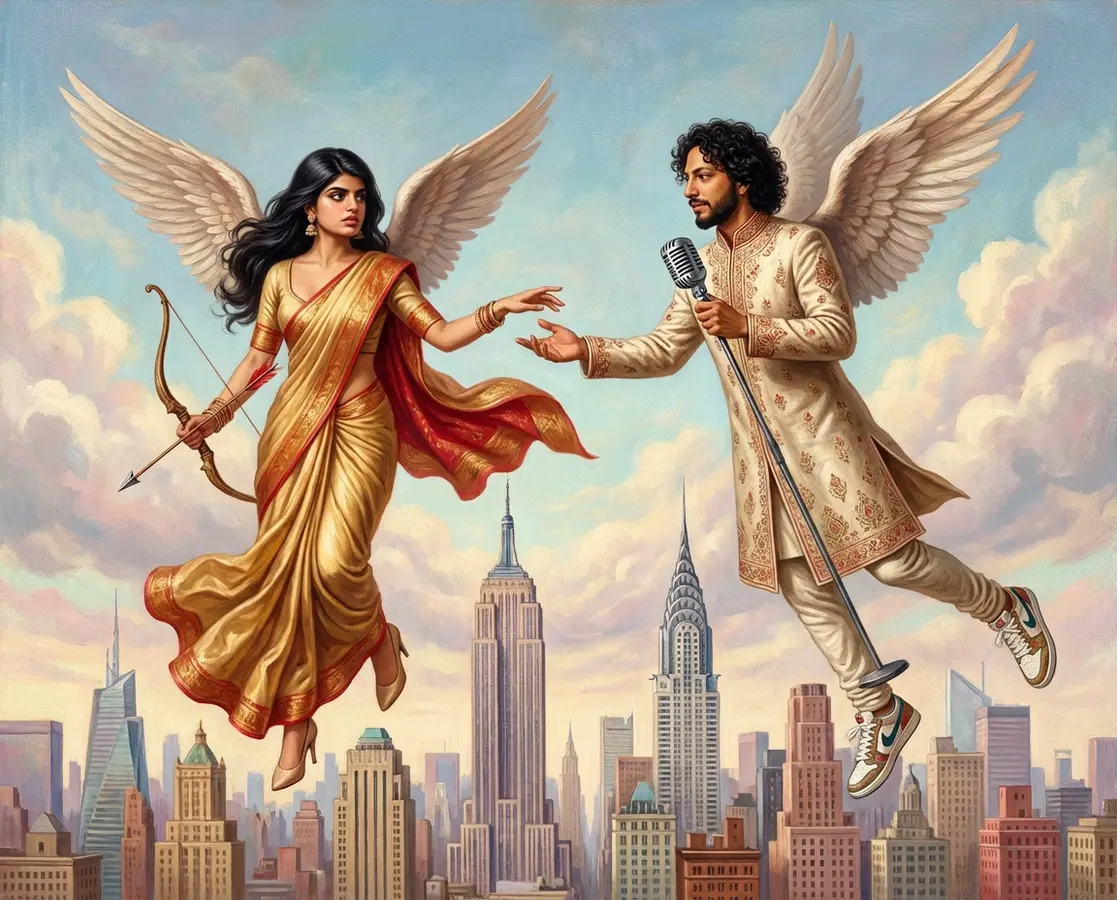
Indian Matchmaking is ultimately a produced show with a narrative shape, editing choices and a cast selected for television. What it cannot be is unscripted. Garam Masala Dating is the version of this that has no edit. Two South Asian singles meet for the first time on stage. There is no producer asking them leading questions. There is a live audience voting in real time on whether they have chemistry. It is the most honest format for what the show is trying to capture, because nothing is shaped after the fact. Come see for yourself.